
Rebecca Share-Howard
You deserve to be heard
Independent, board-certified patient advocate — and someone who has sat on your side of the exam table for most of her life.
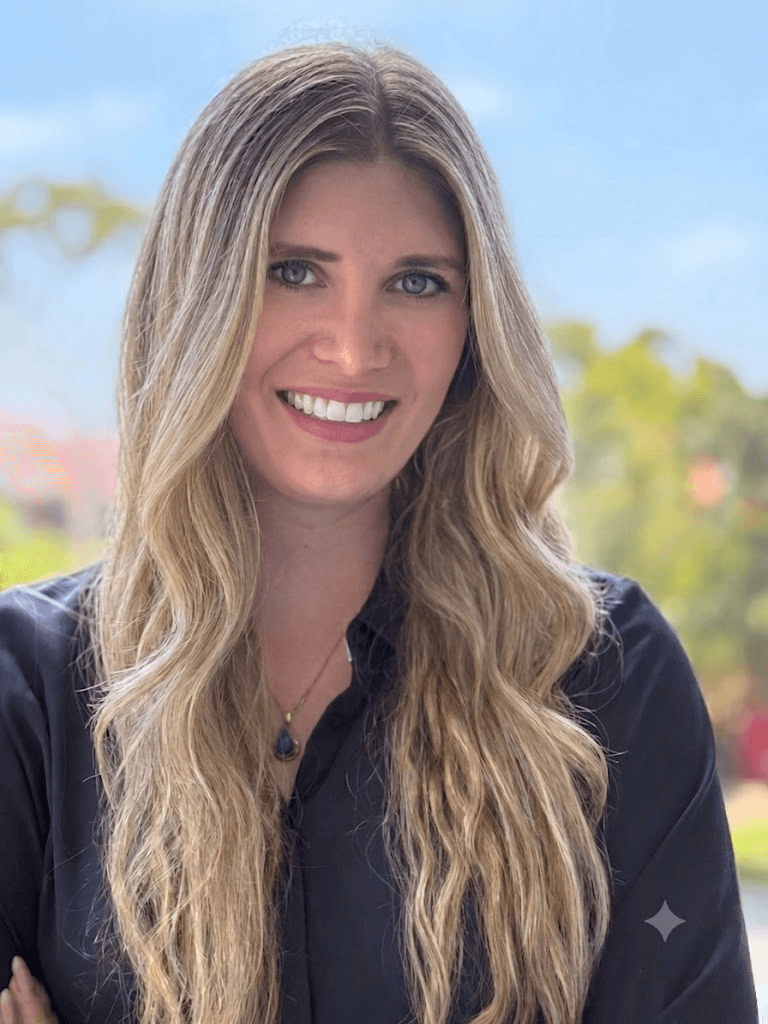
My story is why I do this work
I was diagnosed with chronic pain at age 10. At 18, spinal surgery was followed by severe, lasting back pain. More surgeries, health problems, treatments, and specialists followed — along with the repeated experience of falling through gaps in care, struggling to be heard, and watching each specialty focus on its own narrow piece instead of the whole picture.
I also know what changes when someone finally listens. That's where I start with every client: belief. Your experience is real, and it deserves to be taken at face value — then examined as a whole picture, not a stack of disconnected parts.
I originally pursued the path toward becoming a physician and spent two years in daily, hands-on clinical work as Patient Care Coordinator for the Chief of Clinical Gastroenterology at Cedars-Sinai. I ultimately realized independent patient advocacy was where I could best combine that clinical experience with the persistence, empathy, and hard-learned knowledge that came from being a patient myself.
I earned a B.A. in Public Health with a minor in Disability Studies from UC Berkeley, completed the University of Miami Patient Advocacy Certificate Program, and became a Board Certified Patient Advocate. Whole Story Advocacy is the result: an independent practice centered on people whose pain is primary, secondary to another condition, still unexplained, or too complex to fit neatly into one specialty.
“I knew for certain that I had to do something with what I had learned through my own experiences with pain in so many forms.”— Rebecca Share-Howard, BCPA
What stands behind the work
- Board Certified Patient Advocate (BCPA) — the profession's board credential, with ongoing education and a binding code of ethics
- University of Miami Patient Advocacy Certificate Program
- University of California, Berkeley — B.A. in Public Health, minor in Disability Studies, 2015
- Two years of clinical work and hands-on patient experience as Patient Care Coordinator for the Chief of Clinical Gastroenterology at Cedars-Sinai
- Member of the Alliance of Professional Health Advocates (APHA)
- A lifetime of lived experience with chronic pain and complex, multi-system illness
- Practice focus: primary, secondary, undiagnosed, and complex chronic pain

Independence, in plain terms
I am hired directly by patients and families — never by hospitals, insurers, or providers. I don't accept referral fees or compensation for steering clients anywhere. Every recommendation is based on your goals, your circumstances, and your informed choice.
Where my role ends
I provide non-clinical advocacy, navigation, research support, and care coordination. I don't diagnose, prescribe, or make treatment decisions. You remain the decision-maker, and clinical questions belong with your licensed treating professionals.
Relentless about details, humane about the cost
I read every chart, track every medication, and listen closely to what's said — and what isn't — in provider visits. Fragmented care taught me the hard way to be the person who looks at the whole picture and pays attention to all the details.
And because I know what this journey takes out of you, the work stays humane: plain language, honest uncertainty, practical support for daily life, and connections to appropriate services or support groups. None of that replaces being heard; it helps make the next step more manageable.
Book a Free Call